Why the Moon Phase Matters More Than Your Horoscope for Day-to-Day Planning
The moon phase today shapes your emotional baseline more directly than most daily horoscopes ever could. While your Sun sign forecast stays the same for millions of people, the lunar cycle operates on a tight 29.5-day loop that hits everyone equally — and it's measurable. Farmers have planted by it for centuries. Surgeons have studied bleeding patterns around full moons. Fishermen still check the phase before heading out. Whether you approach the moon from a spiritual angle or a purely practical one, it's the single fastest cosmic cycle you can actually feel in your daily life.
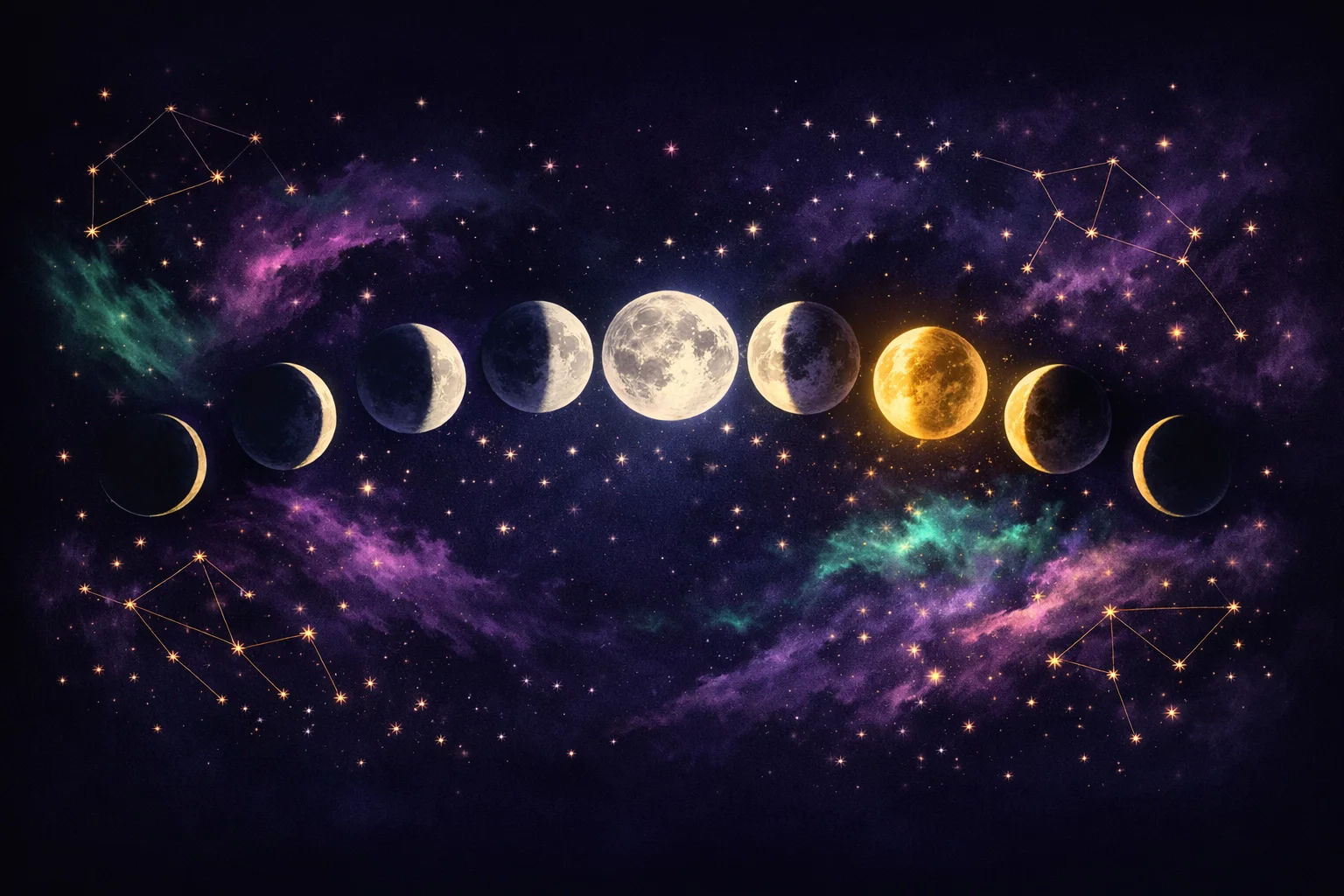
The Eight Phases at a Glance
Before getting into the subtleties, here's a straightforward reference for what each phase means practically. Bookmark this and check it against the tracker above whenever you're planning something important.
| Phase | Illumination | Duration | Practical Use |
|---|---|---|---|
| 🌑 New Moon | 0% | ~3.7 days | Set intentions, start journals, plant seeds |
| 🌒 Waxing Crescent | 1–49% | ~3.7 days | Take first steps, commit, gather resources |
| 🌓 First Quarter | 50% | ~3.7 days | Make decisions, push through resistance |
| 🌔 Waxing Gibbous | 51–99% | ~3.7 days | Refine, edit, seek feedback, prepare |
| 🌕 Full Moon | 100% | ~3.7 days | Celebrate, release, ritual work, clarity |
| 🌖 Waning Gibbous | 99–51% | ~3.7 days | Share wisdom, express gratitude, teach |
| 🌗 Last Quarter | 50% | ~3.7 days | Let go, declutter, forgive, rest |
| 🌘 Waning Crescent | 49–1% | ~3.7 days | Meditate, dream journal, surrender |
Notice how the cycle maps neatly onto a project lifecycle: start something at the new moon, build through the waxing phases, evaluate at the full moon, wind down and integrate through the waning phases. It's a built-in planning framework that resets every month.
New Moon vs. Full Moon — Two Halves of the Same Coin
Most people fixate on the full moon — it's dramatic, it's visible, it gets blamed for everything from bad traffic to emotional meltdowns. But the new moon is equally powerful, just quieter about it. Think of the new moon as inhaling and the full moon as exhaling. You can't breathe out effectively if you never took a proper breath in.
The new moon sits between the Earth and Sun, invisible in the night sky. Astrologically, it's a blank page. Whatever zodiac sign the new moon falls in colors the kind of intentions that hit hardest — a new moon in Aries favors bold personal initiatives, while a new moon in Pisces is better suited to creative or spiritual goals. If you've ever used a birth chart calculator to find your natal Moon placement, pay extra attention to new moons that fall in that sign. They tend to feel more personal.
The full moon, on the other hand, is opposition energy. It sits directly opposite the Sun from Earth's perspective, fully lit, fully exposed. Things that were hidden come to the surface. Emotions run hotter. A 2021 study published in Science of the Total Environmentfound that people took longer to fall asleep and slept fewer total minutes in the days surrounding a full moon — even in controlled laboratory settings without moonlight exposure. So no, it's not just confirmation bias.
The Moon's Zodiac Sign Changes Everything
Here's what most moon phase trackers miss entirely: the phase tells you how muchenergy is available, but the moon's zodiac sign tells you what kind of energy it is. The moon changes signs roughly every 2.3 days, cycling through all 12 signs each month. A waxing crescent in Scorpio feels nothing like a waxing crescent in Sagittarius.
Water sign moons (Cancer, Scorpio, Pisces) amplify emotional sensitivity and intuition. Fire sign moons (Aries, Leo, Sagittarius) push for action and spontaneity. Earth sign moons (Taurus, Virgo, Capricorn) ground you in practical matters. Air sign moons (Gemini, Libra, Aquarius) favor communication, socializing, and intellectual work.
Cancer is the sign ruled by the Moon, so when the transiting moon passes through Cancer, emotions often run deeper than usual for everyone — not just Cancer Sun signs. If you're scheduling a difficult conversation, check the moon sign first. A Taurus or Capricorn moon day gives you more emotional steadiness than a Scorpio or Pisces moon day.
How to Track Your Personal Moon Patterns
The most useful thing about a moon tracker isn't knowing tonight's phase — it's building a personal data set over time. After 2-3 full lunar cycles of tracking, most people notice reliable patterns in their own energy, sleep, and mood. Here's a simple method that actually works:
- Open the calendar above and note today's phase and moon sign.
- Each night, jot down one sentence about your energy level and emotional state. Nothing elaborate — "tired and irritable" or "focused and productive" is enough.
- After one full cycle (29-30 days), lay your notes next to the phase calendar. Look for repeats. Do you consistently crash during the waning crescent? Get restless during the first quarter?
- By month three, you'll have enough data to actually plan around your patterns. Schedule high-stakes meetings during your strong phases. Guard your calendar during your low ones.
This isn't mystical hand-waving. It's pattern recognition applied to a reliable 29.5-day cycle. Even if you're skeptical about astrological influence, the exercise of consistent self-tracking has value on its own.
Planting, Pruning, and Harvesting by Lunar Timing
Lunar gardening isn't New Age — it's one of the oldest agricultural practices on record. The concept is simple: plant above-ground crops during waxing moons (when gravitational pull draws moisture upward) and root crops during waning moons. Prune during the waning phase to minimize sap loss. Harvest at or near the full moon for maximum moisture content.
Modern research on this is mixed but not dismissive. A 2012 meta-analysis in the Journal of Agricultural Sciencefound small but consistent effects of lunar timing on germination rates in several crop species. Whether the mechanism is gravitational (tidal effects on soil moisture), light-based (moonlight affecting photosensitive germination), or something else entirely is still debated. But plenty of farmers who couldn't care less about the debate still plant by the moon — because they've watched it work in their own fields for decades.
Use the calendar above to plan your planting schedule. The waxing crescent through first quarter is traditionally best for leafy greens and above-ground annuals. The waning gibbous through last quarter suits root vegetables, bulbs, and transplanting.
Simple Moon Rituals That Don't Require a Crystal Collection
You don't need a full altar setup or a specific spiritual tradition to work with moon energy. The simplest rituals are just structured moments of reflection timed to the cycle. Here are three that actually stick:
New Moon Check-In (5 minutes):Write down 1-3 things you want to invite into your life this cycle. Be specific — not "more money" but "close the freelance contract with [client]." Put the list somewhere you'll see it daily.
Full Moon Release (10 minutes):Write down what's weighing on you — resentments, fears, habits you're done with. Read them aloud once, then tear up or burn the paper. Sounds dramatic, but the physical act of destroying the list creates a psychological bookmark your brain actually registers.
Quarter Moon Review (3 minutes):At each quarter moon, pull up your new moon list and honestly assess. What's moving? What's stuck? Do you need to adjust the goal or the approach? This is the moon-cycle version of a weekly standup. Pair it with a quick yes or no tarot pull if you want an intuitive gut-check alongside the rational review.