The Devil Tarot Card: The Chains You Chose and the Power to Lift Them Off
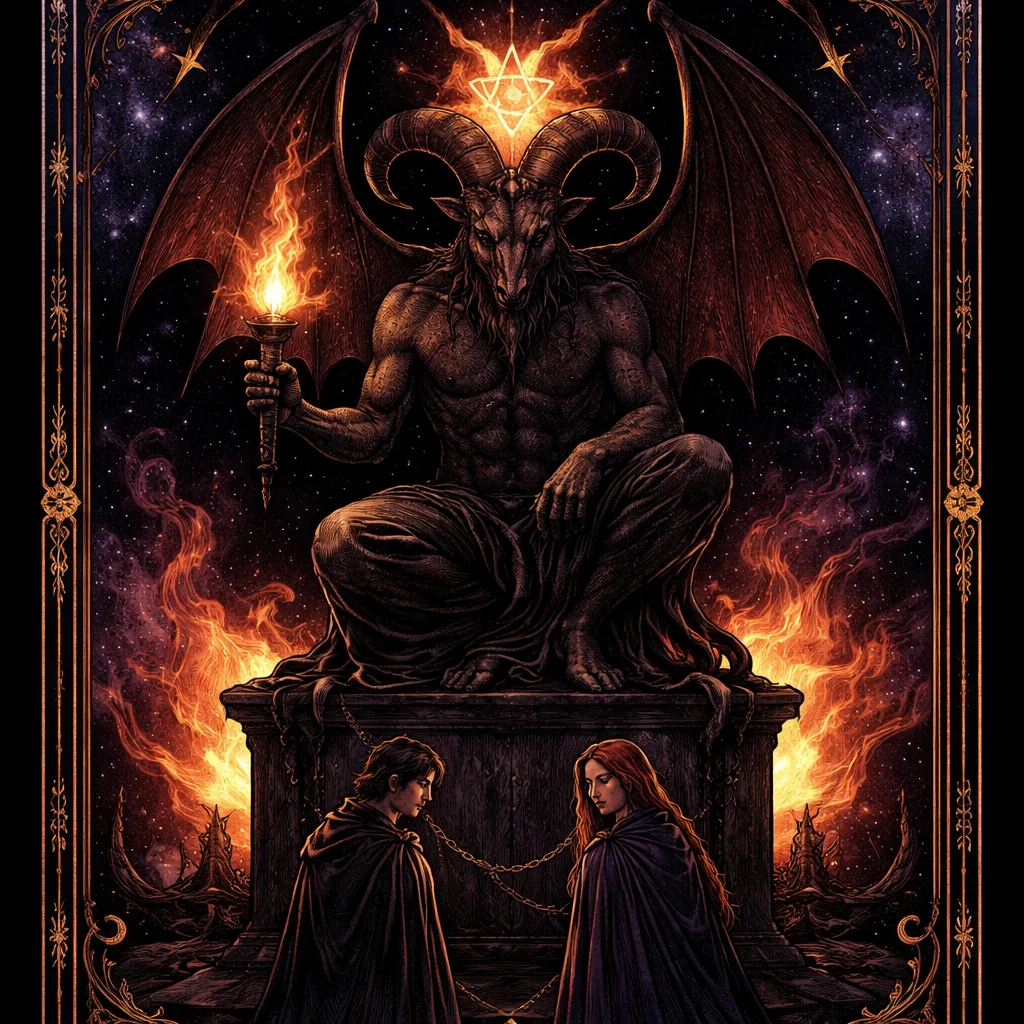
The Devil tarot card meaning sends a jolt of dread through almost everyone the first time it turns up — the horns, the chains, the literal devil staring back at you. I've watched people physically lean away from the table when it lands. But here's what years of reading this card have taught me: the people who flinch are almost always reacting to the picture, not the message. Card XV isn't about cosmic evil or a curse coming for you. It's about something far more ordinary and far more useful — the thing you're attached to that you already know isn't good for you.
Why The Devil Isn't the Card You Fear
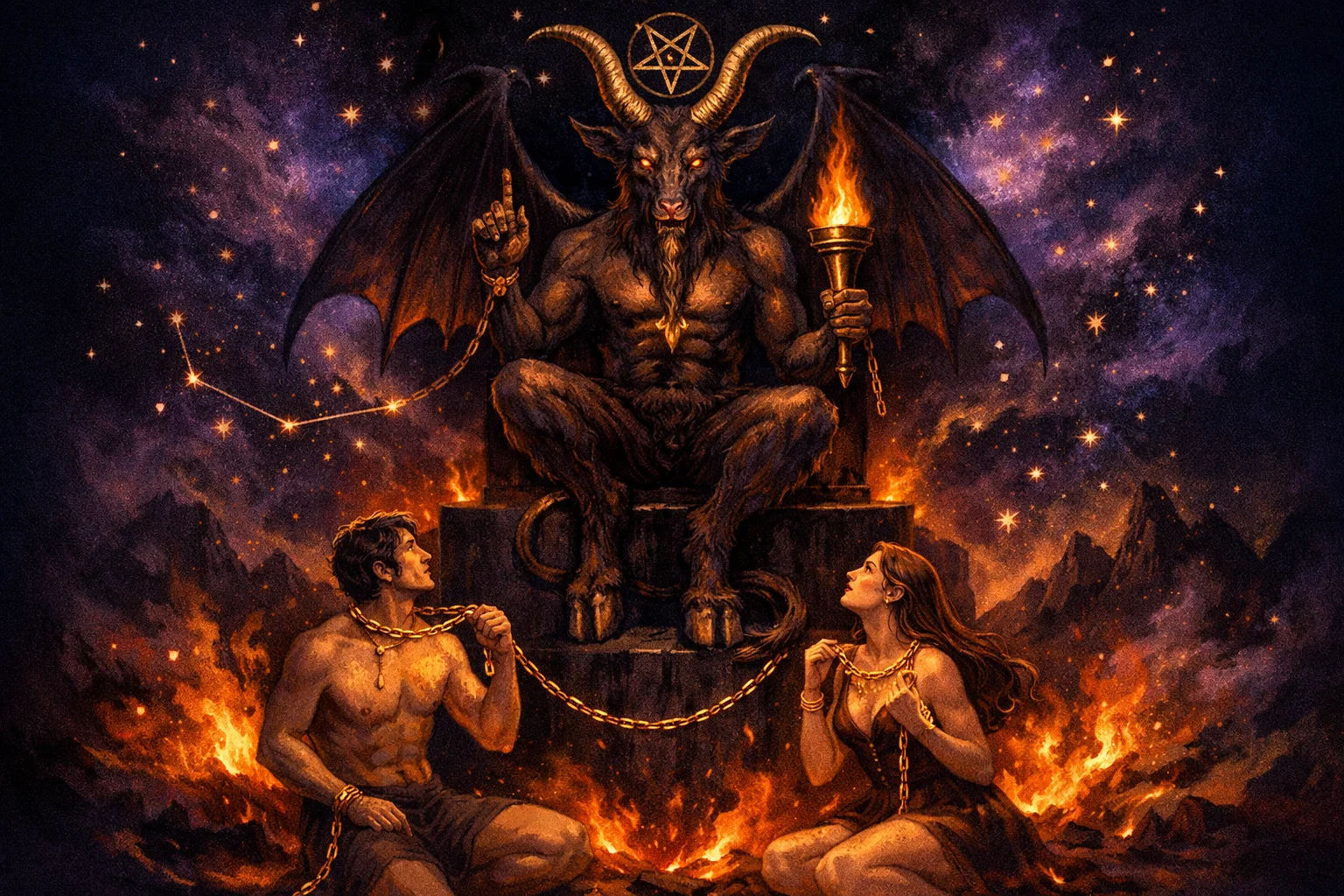
Let's clear the biggest misconception first, because it poisons every reading where this card appears. The Devil does not predict possession, hellfire, or a malevolent force ruining your life. In the Rider-Waite-Smith tradition, the horned figure is Baphomet — a symbol of base instinct, materialism, and the parts of human nature we'd rather not admit to. The card is a mirror, not a monster. When it shows up, it's pointing at a place where you've handed your power over to something: a habit, a person, a craving, a fear, a belief that you're not allowed to want more.
That reframe matters because fear makes people misread the card as hopeless. It's the opposite. The Devil is diagnostic. It names the trap precisely so you can see it — and once you can see a trap, you're already halfway out of it.
The Chains Are Loose — That Changes Everything
Here is the single detail that unlocks the whole card, and most people miss it. Look closely at the two human figures chained at the base of the pedestal. The collars around their necks are loose. Wide open. They could lift them off and walk away at any moment. They don't. That's not a drawing mistake — it's the entire thesis of the card.
The bondage The Devil describes is almost always self-imposed. Nobody is holding you in the dead-end job, the relationship that drains you, the spending you can't justify, or the story that you're stuck. You stay because, on some level, staying meets a need — comfort, escape, identity, the illusion of safety. The chain feels locked, but the lock is in your hand. This is why The Devil, for all its menace, is one of the most genuinely empowering cards in the deck once you understand it. It doesn't say “you're trapped.” It says “you forgot the collar comes off.”
Reading the Symbols on the Card
The Devil is dense with imagery, and each piece sharpens the meaning. When this card shows up in a reading, the symbols tell you which flavor of attachment you're dealing with. Here's what each element is actually saying.
| Symbol | What It Means |
|---|---|
| Baphomet (horned figure) | Base instinct and materialism — the animal appetites and ego drives that take over when we stop choosing consciously. |
| Inverted pentagram | A five-pointed star pointing down: spirit subjugated to matter. The physical and the material ruling over the higher self. |
| Downward torch | An inverted flame illuminates nothing — energy and passion aimed at destruction or numbness instead of light. |
| Loose chains | The heart of the card: bondage you could escape but choose not to. Self-imposed limitation, not a prison someone built for you. |
| The two figures' tails | One tipped with fire (lust), one with grapes (indulgence) — the specific appetites that grew once the figures forgot they could leave. |
Upright: The Chain You Keep Choosing
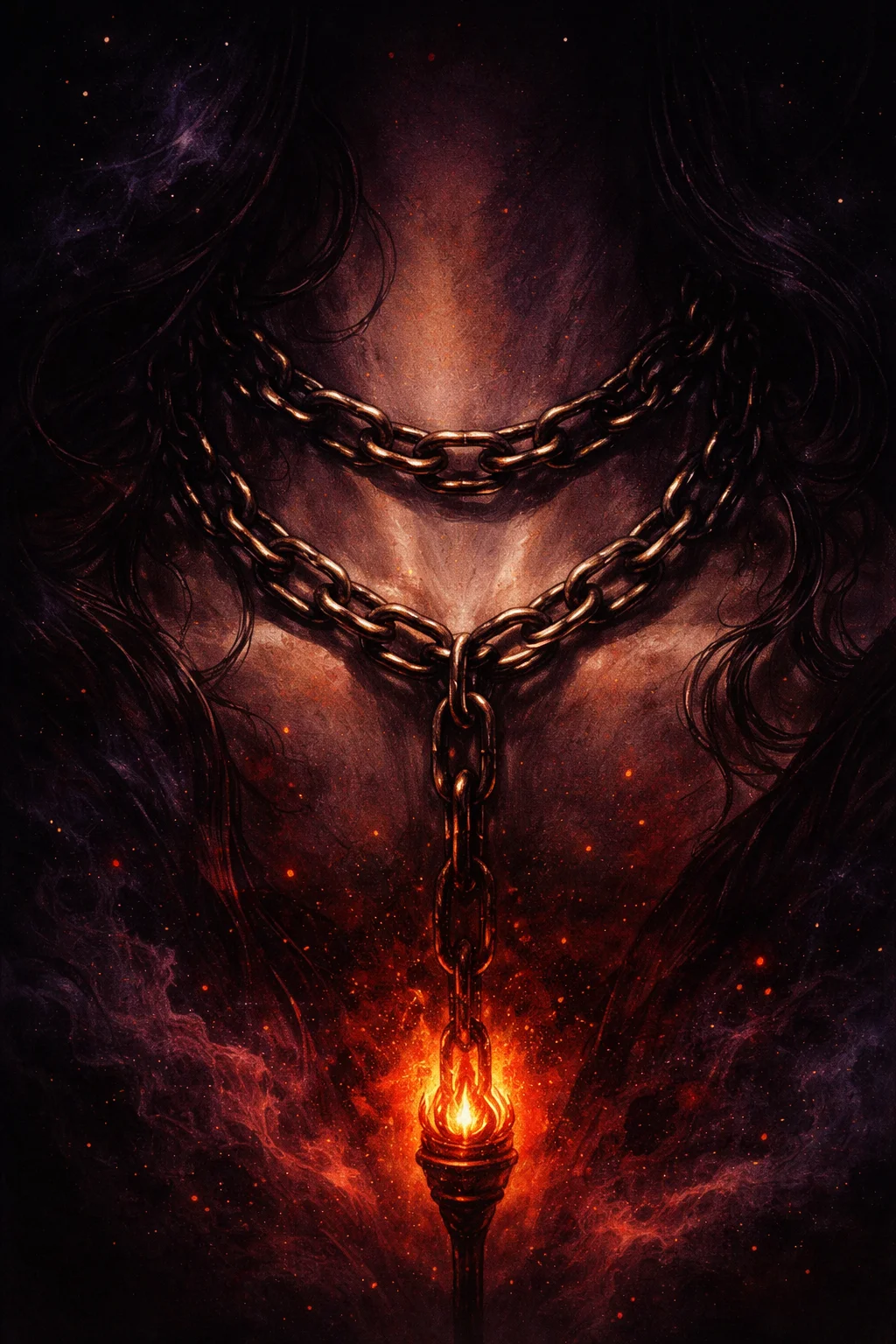
Upright, The Devil is attachment, dependency, and the shadow side of desire. In love it's the bond built on chemistry and hooks rather than peace — the on-again-off-again cycle, the person you keep going back to against your better judgment. In work it's the golden handcuffs, the role you've outgrown but won't leave because the comfort and status feel impossible to surrender. Around money it's overspending, debt, and the belief that the next purchase will finally satisfy. Around the body it's the habit that's gone automatic — the third drink, the late-night scroll, the comfort that stopped comforting a while ago.
What ties all of these together is the gap between what you know and what you do. The upright Devil rarely describes ignorance. It describes a pattern you're fully aware of and keep feeding anyway, because the payoff — however small — still feels worth the cost. The card's job is to make that trade conscious, because an unexamined chain stays on forever.
Reversed — The Collar Comes Off
Reversed, The Devil is one of the most hopeful cards you can draw. The chain is coming off. This is the card of finally leaving the relationship you kept returning to, breaking the habit, paying down the debt, or seeing through a fear that had quietly run your decisions for years. Where upright names the trap, reversed shows you stepping out of it — awareness replacing denial, choice replacing compulsion.
It's worth being honest that reversed doesn't always mean you're already free. Often it catches you in the difficult middle: you've named the problem out loud, but the pull is still strong and some days you lose. That's not failure — that's the actual shape of breaking free. The card's message reversed is that the power has shifted back to your side of the table, even when the work isn't finished. Sometimes the reversed Devil sits next to The Tower's sudden collapse of a false structure, which can be exactly the jolt that finally knocks the collar loose.
The Devil and The Lovers: Same Image, Opposite Choice
Here's a piece of tarot most casual readers never notice. The Devil is widely understood as the shadow twin of The Lovers (card VI), and the numbering proves the link: XV is 15, and 1 + 5 = 6. Both cards show a man and a woman standing beneath a large winged figure. In The Lovers, that figure is an angel and the couple is free, conscious, and choosing each other from a place of values. In The Devil, the angel has become Baphomet and the couple is chained — the same bond, degraded into dependency.
This is the most useful question The Devil can put to any relationship, job, or commitment: am I here by choice, or by fear of being without it? The Lovers chooses; The Devil clings. When both cards appear in one reading, the spread is usually asking you to tell the difference between a connection you'd pick again and one you're only keeping because the chain feels locked. That same willpower, used to create instead of to cling, is the energy of The Magician's conscious manifestation— The Devil is what that power looks like when it's turned toward control or illusion.
Is The Devil a Yes or a No?
For most questions, The Devil is a no — or more precisely, a “yes, but at a cost you'll regret.” If you're asking whether something is healthy, sustainable, or good for your long-term wellbeing, this card is waving a red flag. The short-term pull is real; the long-term price is steep. For decisions about commitment, money, or whether to break a pattern, read it as a warning to slow down and look at what you're actually signing up for.
The exception is questions about raw attraction or chemistry. “Is there a spark here?” “Does this person want me too?” — for those, The Devil can be a heated yes, because magnetism is exactly its territory. Just don't confuse a yes about chemistry for a yes about whether the thing is good for you. If you want a clean verdict on one specific fork in the road, a focused yes-or-no tarot pull pairs well with The Devil's “proceed with your eyes open” energy.
When The Devil Is Just Honest Desire
A fair reading has to admit something the doom-and-gloom interpretations skip: The Devil isn't anti-pleasure. The body, desire, ambition, and material comfort aren't evil, and a reader who treats every appearance of this card as a scolding does the querent a disservice. Sometimes The Devil simply honors appetite — a passionate relationship where both people are honest about what they want, enjoyment of the physical world, healthy ambition that hasn't curdled into obsession.
The line between the two is whether the appetite is serving you or you're serving it. A glass of wine with dinner is pleasure; needing it to get through the evening is a chain. A demanding job you love is drive; one that's eaten your relationships and you can't step back from is bondage. The Devil's real warning isn't against wanting things — it's against forgetting you're the one who decides. When you can enjoy something and also walk away from it, the collar isn't on. When you can't, it is. That's the whole test.
What Changes The Devil's Meaning Beside It
A single card sets the theme; the cards around it tell you what kind of chain you're dealing with and which way it's moving. These are the pairings that shift The Devil's meaning the most.
| Paired With | Combined Meaning |
|---|---|
| The Lovers (VI) | The shadow meets its source. Usually a relationship reading asking whether the bond is a free choice or a dependency wearing the costume of love. |
| The Tower (XVI) | Bondage followed by collapse. The structure The Devil built on a shaky attachment is about to be blown apart — often the shock that finally frees you. |
| Death (XIII) | A powerful release combo. The attachment is genuinely ending — not a relapse, a real transformation. The chain doesn't loosen; it's cut. |
| The Magician (I) | Power and its abuse, side by side. Watch for manipulation, charisma used to control, or talent aimed at deception rather than creation. |
| The Star (XVII) | Recovery after the dark. Healing, renewed hope, and the calm that comes once the chain is off — one of the most reassuring follow-ups The Devil can have. |
One last thread worth pulling: The Devil is ruled by Capricorn and its planet Saturn, the signature of ambition, discipline, structure, and consequence. That's why so many of this card's chains are built from things that look like virtues — hard work, security, the relentless climb. Capricorn's drive is a gift until it becomes the thing you can't put down. If you're curious how strongly this energy runs in you, your birth chart's Capricorn and Saturn placements are where the Devil's particular tug-of-war between discipline and obsession shows up most clearly.