A Truce Has a Purpose. A Stalemate Needs an Exit.
The Two of Swords tarot card meaning isn't an instruction to hurry up and choose. Upright, it can describe a necessary truce, a guarded heart or two arguments held in balance. Reversed, that balance may loosen into clarity or break into pressure. The useful question is what the pause is doing: allowing something to become knowable, or keeping an uncomfortable truth out of the conversation?
Upright: a truce can be the right move
Calling the Two of Swords "indecision" catches its difficult side and misses its strength. Two people can stop an argument without solving it. Someone can decline to commit while a crucial answer is missing. In both cases the blades stay raised, but nobody swings. That restraint can be useful.
In A. E. Waite's original Two of Swords entry, the upright meanings include balance, courage and friendship, qualified by the phrase "concord in a state of arms." The harmony has conditions. Waite's reversed list is harsher, emphasizing dishonesty and disloyalty rather than a simple breakthrough. Those older meanings explain why this card can hold both peace and distrust.
My reading rule is to ask for the pause's exit condition. "We'll decide after both of us have read the proposal" names one. "We'll decide when nobody feels uncomfortable" may never arrive. The difference is small enough to write in a sentence, but it separates protective restraint from an arrangement that quietly prevents change.
Read the hands as well as the blindfold
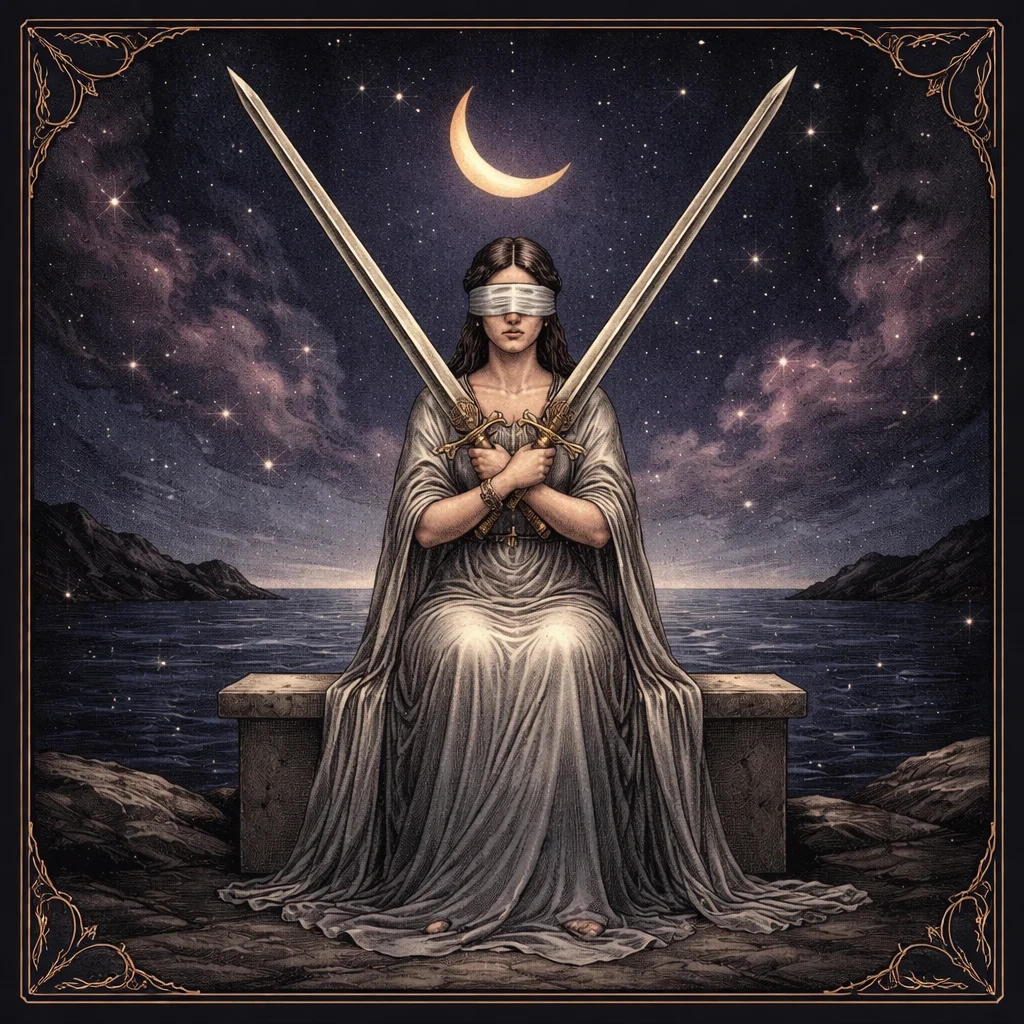
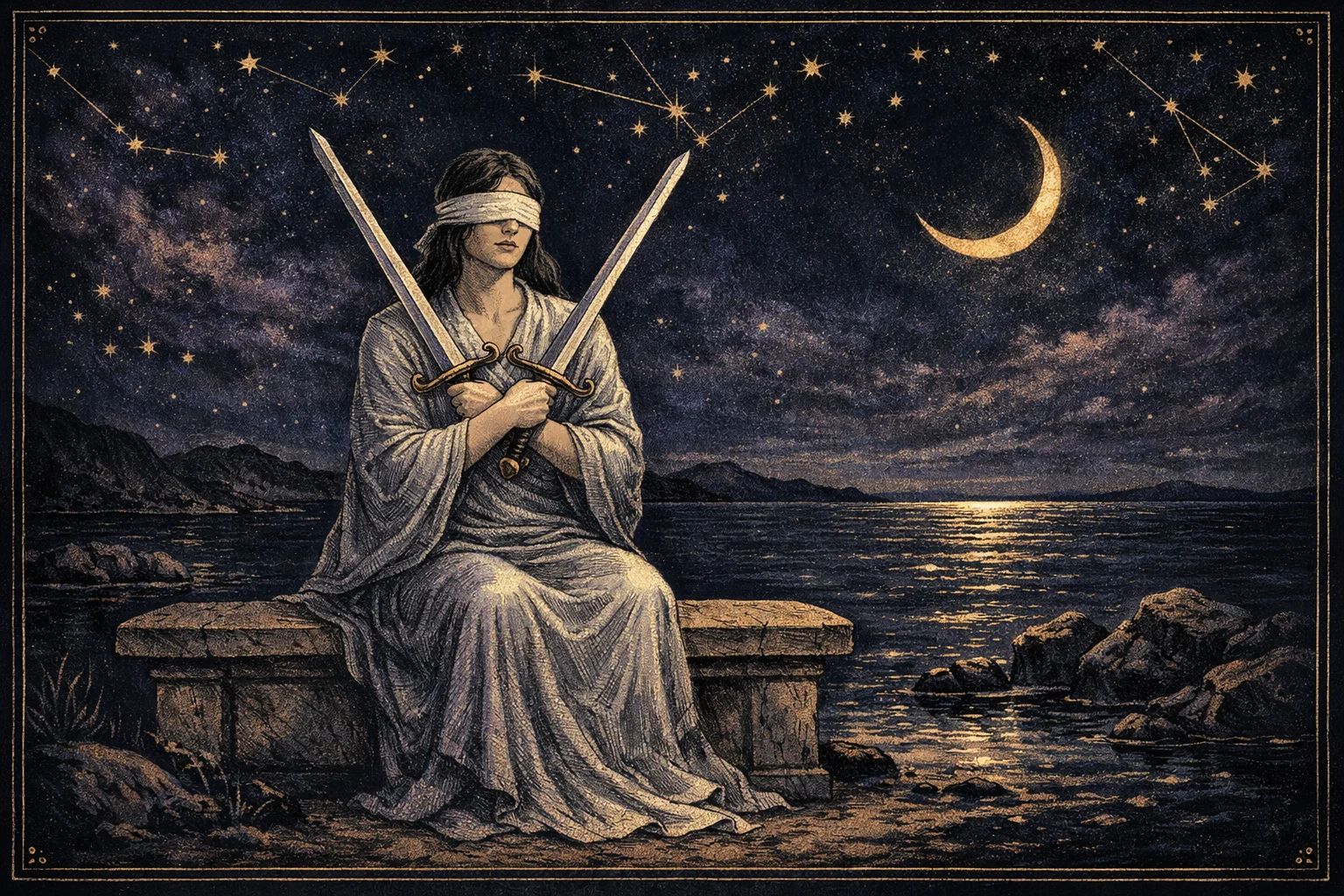
Look at the Rider-Waite-Smith Two of Swords image: a seated, blindfolded figure holds two blades across the body, with water and a crescent moon behind her. She is holding the swords herself. That detail supports a reading of active restraint, even though the scene looks still.
The blindfold can suggest unavailable information, deliberate withdrawal from distractions, or refusal to look. The image alone cannot tell you which. The crossed arms also screen the chest, inviting a reading about protecting feelings through argument. Meanwhile, the sea remains behind the figure: emotional information exists outside the position she is maintaining.
Read those as possibilities, not instructions from the artist. A useful visual exercise is to imagine lowering one blade enough to make room for a new question. You don't have to abandon both positions before examining either. The card's symmetry can make two options look equally sound even when only the effort spent defending them is equal.
The Golden Dawn attribution is Moon in Libra, the sign's first ten degrees. It gives the image a symbolic pairing of feeling and balance; it doesn't identify a live lunar transit. A Moon correspondence is also no guarantee of intuition. Sometimes the unexamined feeling is fear of upsetting someone.
Reversed: has anything actually become clearer?
Two of Swords reversed can describe the stalemate releasing. Someone says the sentence they were withholding, an answer arrives, or a choice stops looking evenly balanced. This is the constructive interpretation, but it needs something in the situation to support it.
The other reading is overload. The same two arguments remain, only now there's a deadline, more advice, or a fight about how long the decision is taking. Pressure has increased; knowledge hasn't. Calling that "clarity" would mistake being forced to move for knowing where to go.
Compare one before-and-after detail. What can you now name that you couldn't name yesterday? If the answer is a real term, preference or agreement, the reversal can be read as release. If the answer is only "I can't stand waiting," read the strain. Neither branch automatically makes the outcome good or bad, and Waite's darker keywords do not establish that someone is lying.
Two of Swords in love: silence is not consent
The Two of Swords love meaning often sits in the gap between affection and a decision about the relationship. You might enjoy being together while avoiding exclusivity, where to live, or how much contact each person wants. A pleasant evening doesn't answer a question neither person has asked.
As feelings, the card can symbolize guardedness, ambivalence or a wish to keep emotion contained. It cannot reveal a partner's private thoughts. Nor do two blades prove two lovers or a third-party situation. The picture supplies a tension between positions, not a headcount of people.
In an established relationship, a mutually agreed pause may be the helpful upright reading: "We're too tired to settle the visit tonight; we'll discuss it tomorrow." Quietly refusing the topic for months is different. Reversed can show the conversation finally opening, or the unspoken disagreement spilling out sideways. Listen for whether the actual issue gets addressed.
For reconciliation, distinguish a ceasefire from repair. Stopping the argument doesn't establish a new agreement about what caused it. And if contact is unwanted or unsafe, the card is no reason to initiate it. The peace shown by crossed swords never obliges you to stay available to someone.
Give the work dilemma a deciding fact
Imagine a hypothetical job choice. One role offers autonomy; the other offers a predictable schedule. You keep asking which is "better," but those are different benefits. If both offers are fully described, the Two of Swords points toward ranking priorities. Researching the employers for another evening won't choose that ranking for you.
Now change one detail: the supposedly predictable role hasn't confirmed its weekend requirements. That is a missing fact, not a personal failure to commit. Waiting for that answer has a purpose. Once it arrives, the useful pause ends and the genuine tradeoff becomes visible. This is why the same upright card shouldn't produce identical advice in both versions.
With money, the blindfold may be a prompt to look at an unopened statement or an unspoken assumption about a shared expense. It predicts neither profit nor loss. Reversed can describe the numbers becoming harder to avoid, but an urgent feeling is not evidence for a purchase or investment. Base those decisions on actual records, obligations and appropriate advice.
The spread position changes the question
In an obstacle position, this card asks what is keeping two sides locked. In advice, it can support holding judgment while you hear both accounts. In an outcome position, it may describe continued suspension if the present conditions remain. That last reading is conditional; it is not a sentence that your situation will never move.
Beside Justice, ask which shared standard could turn equal-looking arguments into a fair decision. The Two balances blades; Justice carries scales as well as a sword. That visual difference gives the pair a practical question about the evidence being weighed.
With the High Priestess, quiet becomes the question. Is silence making room to notice something, or preventing the issue from being spoken? Don't use the pairing as proof of a secret. With the Hanged Man, consider whether the two options themselves need reframing. Holding a balance and changing your perspective are different kinds of pause.
These combinations offer reading questions, not fixed formulas. Record which card occupies which position. Justice as advice beside the Two as obstacle is a clearer invitation to establish criteria than the same two cards sitting in unspecified places on a table.
Write an exit condition before pulling again
Before treating the Two of Swords as a yes or no, write three short answers. They make the card's particular tension usable without asking it to choose your life for you:
- What are the two blades? Name the actual options, loyalties or priorities being held apart.
- What is the blindfold? Separate an unknown fact from a truth you know but haven't said.
- What ends the hold? Name a conversation, answer or agreed review point that would change the situation.
If you cannot name the third, another draw may only add a third argument to the two you already have. If you can, keep it specific. "After the weekend schedule is confirmed" gives the work example an ending. "When the cards are more positive" hands the choice to repeated sampling.
For a daily card, the smaller version may be enough: postpone an unnecessary verdict, but don't promise two incompatible things just to keep the peace. A useful Two of Swords reading leaves you able to say what you are waiting for.